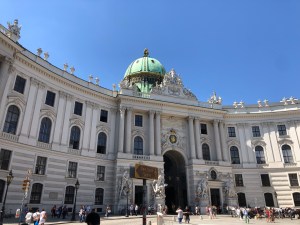
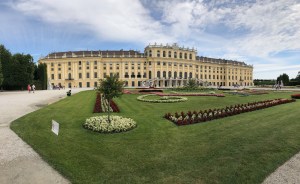
The reign of the Hapsburg Empire brought about a plethora of astounding architectural feats and many differing styles throughout their long years in power. The buildings that came about during this time are opulent and grandiose. Although the Hapsburg were considered frugal with their spending, as the tour guide noted at Schonbrunn, the buildings did not entirely reflect that. The summer palace was incredibly large and the outdoor grounds we walked through would take many hours to cover. Each room had at least something gold in it. Additionally, one Hapsburg king had his own private zoo at the place with exotic animals from around the world. Perhaps this is normal for royalty, but they are still hypocrites for claiming to be sparse in the design of the palace. Although one ruler chose to sit in a relatively plain chair at his desk to show that he was not above everybody else, the extravagance far outweighs any lowly show of modesty. This exhibit of the frugality of the Hapsburgs is fraudulent. A further example is at Hofburg. The Hapsburgs had a huge number of servants for dinner, which is made evident by the sheer number of tableware required for one meal. Another example of their wealth is rooms stacked full with custom sets of serving dishes. One set made from porcelain is the only set in the world with that color of green. Having one simple chair does not make up for their greed and grandeur in other areas.
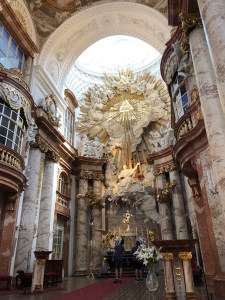
St. Charles’ Church is another great example of Hapsburg wealth. The church is technically named after a saint, but the emperor Charles VI spearheaded the project as a way for his name to be remembered. The inside is opulent marble and gold. It is considering the most elaborate Baroque church in Austria. The young elevator operator pointed out details in the far reaches of the church that the average church-goer would not notice. Going up the elevator into the small structure that overlooked the church allowed me to see how much money went into the design and building processes. This lack of care for spending money to make amazing structures does not fall in line with the preaching of modesty that comes from the Hapsburgs. Most empires also built ornate structures, but did not attempt to be seen as frugal. Perhaps this speaks to the intense wealth of the empire if those rulers considered Schonbrunn, Hofburg, and St. Charles’ Church to be economical.
 Eva's Blog