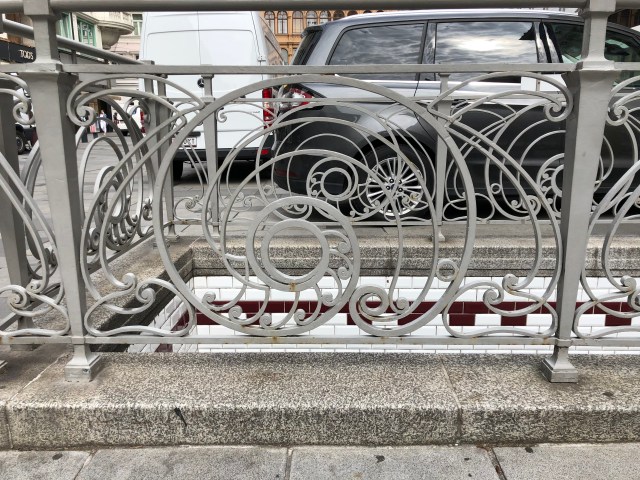
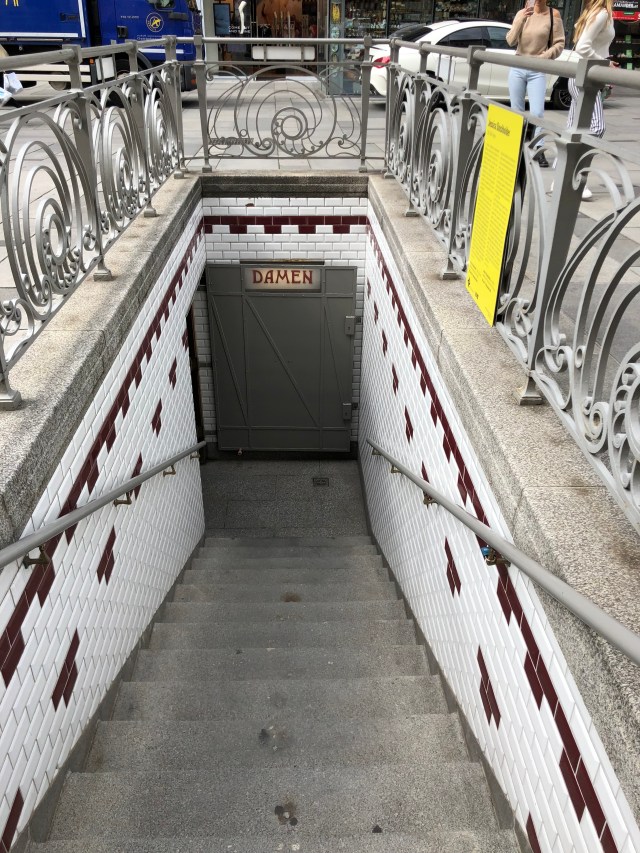
The areas I went around demonstrated functionality in Vienna. These new sites showed an emergence in interest for purposeful architecture that is not purely for show. The public underground bathrooms are an excellent example. The railing above ground are simple white with sparse conch shell pattern. The lack of ornate design is striking compared to the rest of Vienna around Ringstrasse. Additionally, the placement of the bathrooms underground is practical. It does not take up prime real estate in the busy square of Stephenplatz. Although the tile and wood inside was placed and carved nicely, it did not have any extra and unnecessary and lavish decorations that would detract from actually using the toilet. The architect of these bathrooms, Adolf Loos, said “it is a crime against the national economy that it should result in a waste of human labor, money, and material” in response to the devastating impact of intense ornamentation. Clearly, Loos favored less florid designs.
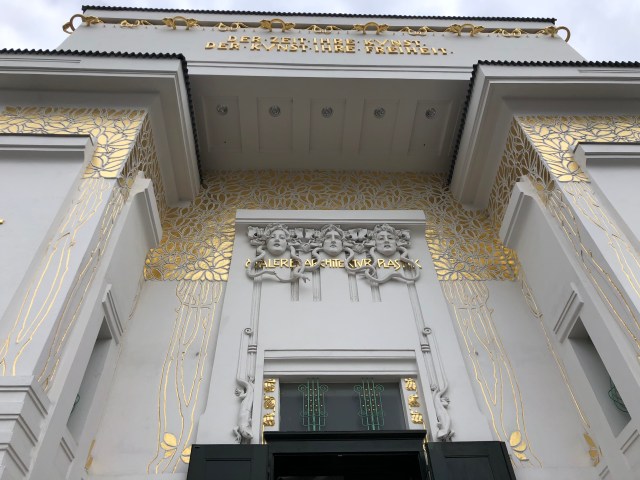
The secessionist art building is a beautiful display of restrained modern faces with white and gold touches. The beginning of modern design saw a decrease in ostentatious designs which broke away from the Baroque style. The “Arts Terms: Secession” link describes this turning point the Vienna Secession, which “played a major part in the broader art nouveau movement and the beginnings of modern design.” The exterior is plain compared to other Viennese buildings. It is open and refreshing. There was nothing that did not need to be there or that got in the way of the experience. I felt I could actually understand the building and see all there was to see. Compared to other Baroque buildings where I felt inundated with imagery, this architecture was more pleasant for the observer. Even the exhibits inside were spaced out enough to actually enjoy the art instead of being overwhelmed. Both the bathroom and the secessionist building had artistic touches, but no extra ornaments.
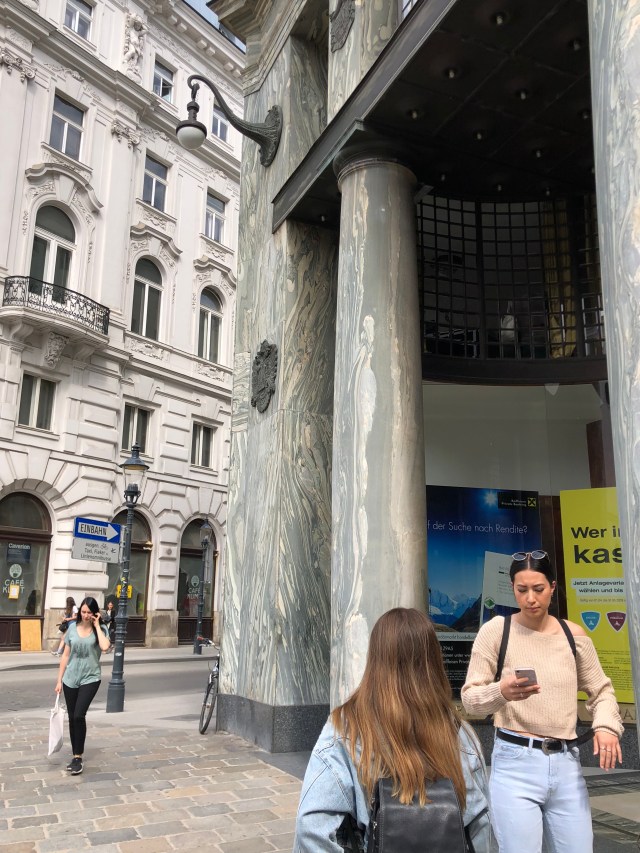
The bank called Looshaus was equally driven by functionality. Although this building departs dramatically from secessionist buildings, it prioritizes the function.The outside is relatively plain with just the name of the bank on the outside. Marble columns stand in front, however these are not detailed with carvings and it provides structural support. The marble adds a hint of beauty, but not in an exaggerated way. The flower boxes above some of the windows is an added touch that originated due to the Viennese wanting “eyebrows” for each window. The architect Adolf Loos obliged because the flowers do not detract from the purpose, even though it is unnecessary. This time period in Vienna shows how the architects and artists of the time favored using less intricate modes of design to transition into modernism and promote intention while creating.
 Eva's Blog