The Royal Festival Hall and the Barbican center in London show how a community area can combine different interests and aspects of the people into one experience. The sweeping architecture lends itself to a space ripe with opportunity for strategic community development that can bond people together.
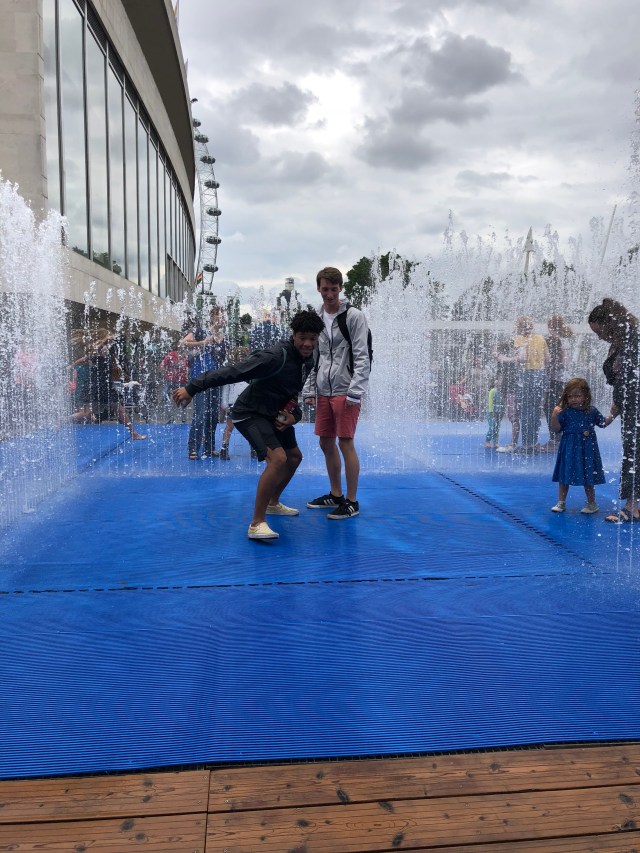
The Festival Hall was a happening place with activities for people of all ages. Outdoors was a booze truck for the adults and a hula-hooping contest for the kids. On the other side of the same area was a water formation that shot up water to enclose the participant, then went down so the kids could run around into different sections. I ran into an opening and was stuck with three children grabbing onto my legs to get away from the water splashing down on all sides.
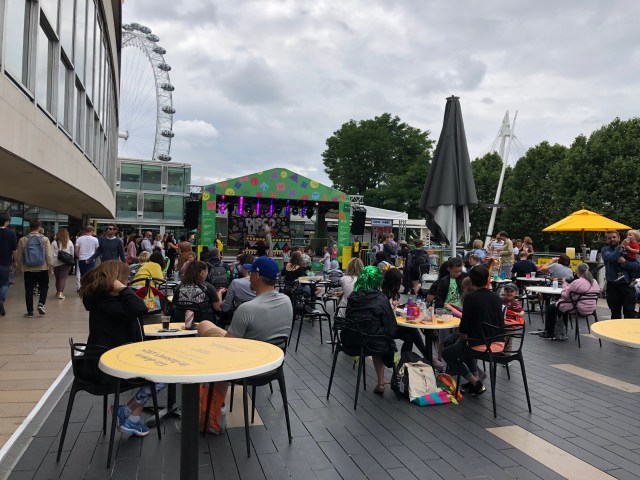
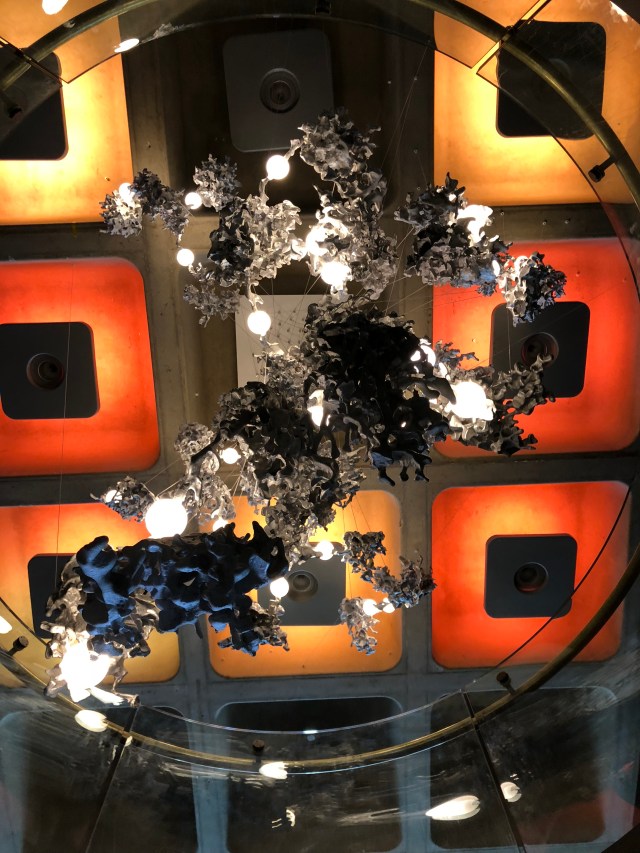
Inside the hall was just as diverse. The bottom floor hosted an elderly couple practicing salsa, the middle floor had a cafe for younger students and professionals to do computer work, and the upper floor had a restaurant and bar for those classy and rich enough to afford it. On the seamen floor as the terrace bar was a poetry library that would make an excellent reading spot for children. Even the elevator had entertainment value, which I would find exciting at any age.
The adults also had an escape if they were less family-friendly orientated that day. The rooftop garden had a lovely place to sit and have a game of cards, or enjoy a beer on tap. There was a security guard of sorts at the stairs to make sure that no unruly children could slip through to the adults only part of the community. I really appreciated that the establishment cared for all types of people, not just those with kids to entertain.
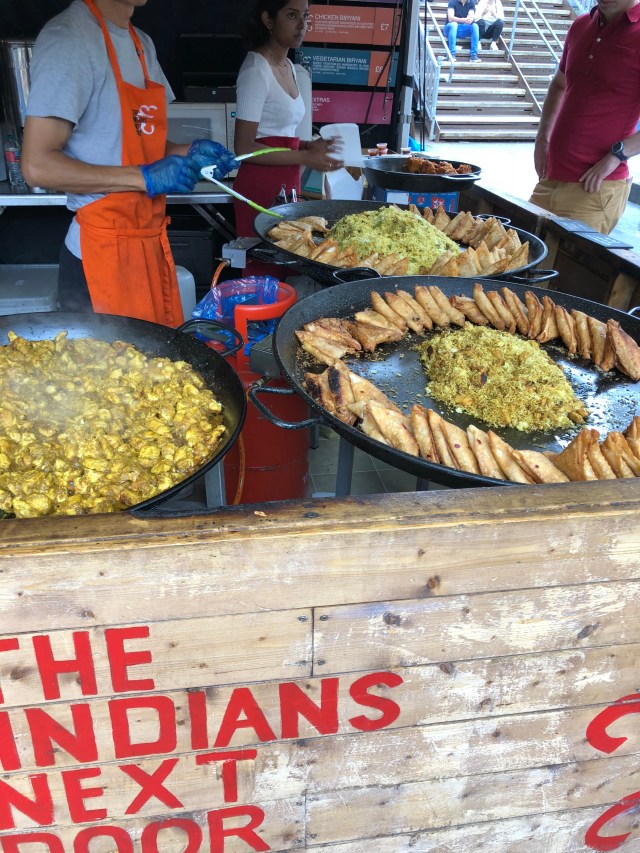
I enjoyed that this building and surrounding areas did not demand payment to exist in the space. Too many places in the United States are so focused on profit that we have to spend money to enjoy ourselves. At the festival hall, I could enjoy the scenery of the river, watch skateboarders, play in the water fountain contraption, and enjoy the flowering surroundings. Iain Borden notes in “Unknown City” that the hall “is one of the very few large public interiors that you can be in without becoming the subject of some controlling interest; unlike the typical public spaces of modernity—shopping malls, station concourses, airports, art galleries—there is no requirement to become a consumer, no obligation to follow a predetermined route through the building” (230). Though eventually, I did have to spend some money in the diverse food market on a vegetable samosa.
The brutalist building the Barbican also was a free community space to enjoy. It spanned a large area of the streets, and I did not realize that it was more than just the museum until I had left the main structure by several yards. This conglomerate had the AI museum, which I danced along with in the video below, a robotic bar, and several restaurants all in one part. Apartments surrounded the outside along with an outdoor pond area for the residents. I felt that it also was a place for the entire community. The exhibits were interesting enough for children and the adults could experience the AI mixing cocktails. Although the outside was not very beautiful and very unassuming, it was a welcoming place to hang around for a long period of time.
In the “Model for a Short-Lived Future?” article about the Barbican, Tsubaki writes that “To specialists from the worlds of design and architecture, the enormous concrete blocks with ostensibly harsh facades seemed vaguely sinister, even threatening” (540). The Barbican has taken great strides to improve the inside to welcoming and the opposite of sinister. This is truly a place for many different types of people to come together and experience brutalist architecture in a new and interesting way.
 Eva's Blog